
Guide
The Noises Your Garage Door Makes in Winter Haven - And What They Mean
In Winter Haven, most garage doors date from 1950 to 2012, mild-climate wear included. Here's what grinding, popping, and slapping noises actually mean.
Local detail
How Local Conditions Play In
Most of the housing stock around here went up between 1950 and 2012, with the heaviest concentration from the 1980s and 90s, and that spread holds across the 27 named areas we cover, from Inwood two miles out to Fort Meade twenty miles south. That matters for noise because a door's sound depends on what era of hardware is hanging on it. A house built in the 80s likely has its original torsion spring and steel rollers still doing the work, and steel on steel gets loud as it wears. Winter Haven sits in a mild temperate band, so we don't get the freeze-thaw cracking that snaps weatherstrip or shrinks metal fittings in colder regions.
That's actually good news - it means when a door here squeals or bangs, the cause is almost always wear, lack of lubrication, or a part reaching the end of its life, not the ground shifting or ice working a bolt loose. Humidity plays a slower role: it can swell wood trim panels over decades and make a door drag along the frame with a low groan instead of a sharp bang. Knowing the difference between a wear noise and a swelling noise saves a service call.
The area
What to Look At First
Start at the top of the door and work down. Track noise - a rhythmic clack as the door travels - usually means a bent section or rollers that have flattened on one side, common once a door hits fifteen to twenty years old, which lines up with a lot of the 1980s-era doors still running in this area. A loud bang followed by the door refusing to move is almost always a torsion spring letting go; don't pull the cord and try to lift it by hand.
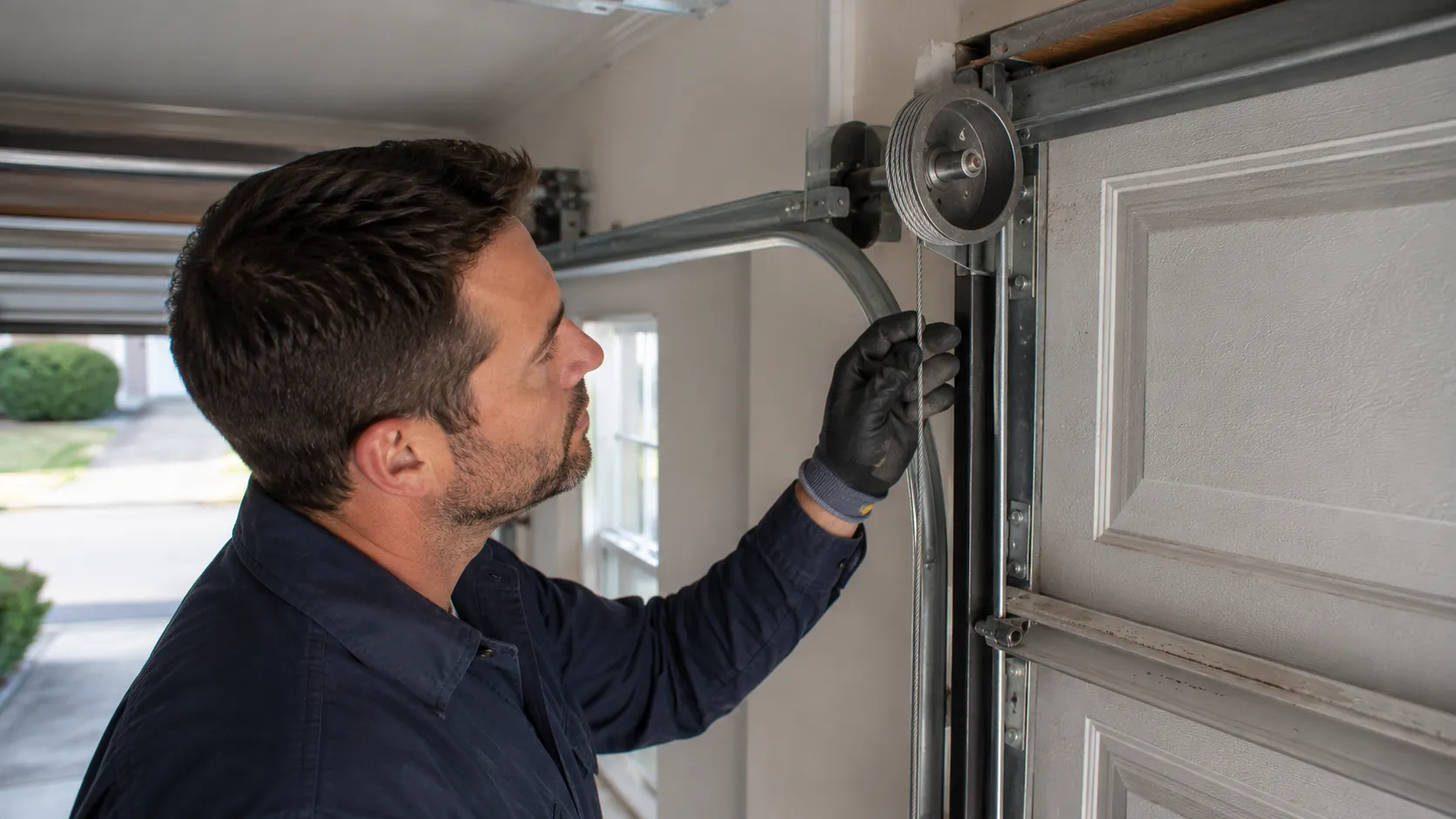
A rattling opener chain or belt is a tension and lubrication issue, not usually a motor problem. Popping or cracking as the door closes often points to a cable losing its wind, which on an original-hardware door from the 1980s or 90s stock common here is more likely a fatigue failure than a fresh defect. Slapping against the frame, rather than the track, generally means the weatherstrip or the bottom panel has warped slightly - more common on older wood-panel doors than the steel doors that came standard later in that 1950 to 2012 build window.
Listen before you touch anything. The sound tells you which part failed before you ever open a tool box.
What we find
The Situation
A lot of the calls we get start the same way: a door that's worked fine for years starts making a new sound, and the owner isn't sure if it's urgent. With 80,516 households in the service area and 43,710 of those owner-occupied houses, a large share of the doors we hear about are original equipment tied to the build date of the house, not an upgrade someone put in later. That means the hardware is often thirty-plus years old by the time it starts talking to you.
In neighborhoods close in - Inwood at two miles, Cypress Gardens and Lake Alfred around four - we see a lot of that 1980s-90s torsion setup still running on its first spring. Further out toward Auburndale or Dundee at six to eight miles, the mix skews slightly newer but the pattern holds: age drives noise more than anything else. At a median household income of $59,346, most owners here are weighing a full spring-and-cable job against just living with the sound a bit longer, which is a fair question to ask - but a spring under tension that's already popping is not a wait-and-see part.
How we work
Where People Go Wrong
The most common mistake is spraying WD-40 on everything and calling it lubrication. It's a solvent, not a lubricant, and it strips what grease is left on rollers and hinges - on a door already running original 1980s or 90s hardware, that speeds up the wear it's supposed to fix. Second mistake: assuming a quiet motor means a healthy door.
The opener can run smooth for years after the springs and cables underneath it have started to fail; the noise usually shows up in the door travel, not the motor. Third: ignoring a single loud pop as a one-off. On original hardware from a house in that 1950 to 2012 build range, one pop is often a cable strand giving way, and the next one can be the whole assembly.
We'll say plainly what we won't do: we don't recommend replacing a full door over a fixable spring or roller issue just because the door has some years on it, and we don't chase every squeak with a truck roll if a homeowner can handle it with the right lubricant and a five-minute look. Not every noise is a job.
Questions
Common questions
My door makes a loud bang and won't open - is that the spring?
Most likely, yes. On a door with original hardware - common in this area given the 1950-2012 build range - a sudden bang followed by a stuck door is almost always a torsion spring breaking. Don't try to force it open by hand or cut the cable. Leave it alone and call for a spring replacement; the tension involved makes this a job for someone with the right bars and clamps.
Why does my door make more noise in summer than winter here?
Winter Haven's mild temperate climate means we don't get the hard freeze-thaw swings that stress metal hardware elsewhere. What you're likely hearing is humidity-related swelling in a wood panel door, or grease that's thinned out and needs reapplying. It's rarely a cold-weather problem the way it would be further north.
Is a grinding noise from the opener serious?
It depends on where the grind is coming from. If it's the motor gears, that can mean the opener unit itself is wearing out. If it's coming from the track as the door travels, it's more often a roller or a bent track section - both fixable without replacing the opener. Worth a look before assuming the worst.
How old does a door usually get before the noise problems start?
Across the housing stock we see, which mostly dates from the 1980s and 90s with some homes as old as 1950 and as new as 2012, noise issues tend to start showing up once original hardware passes the fifteen-to-twenty-year mark. That's rollers flattening, springs fatiguing, and cables losing their wind - normal wear, not a sign of a bad install.
Ready when you are
Need a garage door sorted in Winter Haven?
Winter Haven Garage Door Pros repairs and installs garage doors, springs and openers in Winter Haven, FL and the surrounding area.