
End-of-life wear only
That means the failures we see out here tend to be end-of-life failures rather than early defects: worn-out gears, dying capacitors, boards that have simply outlasted their design life.
Lake Alfred, Winter Haven
Lake Alfred homes went up mostly in the mid-1980s, so a lot of openers here are original chain-drive units past their working life. We travel from Winter Haven to fix them.
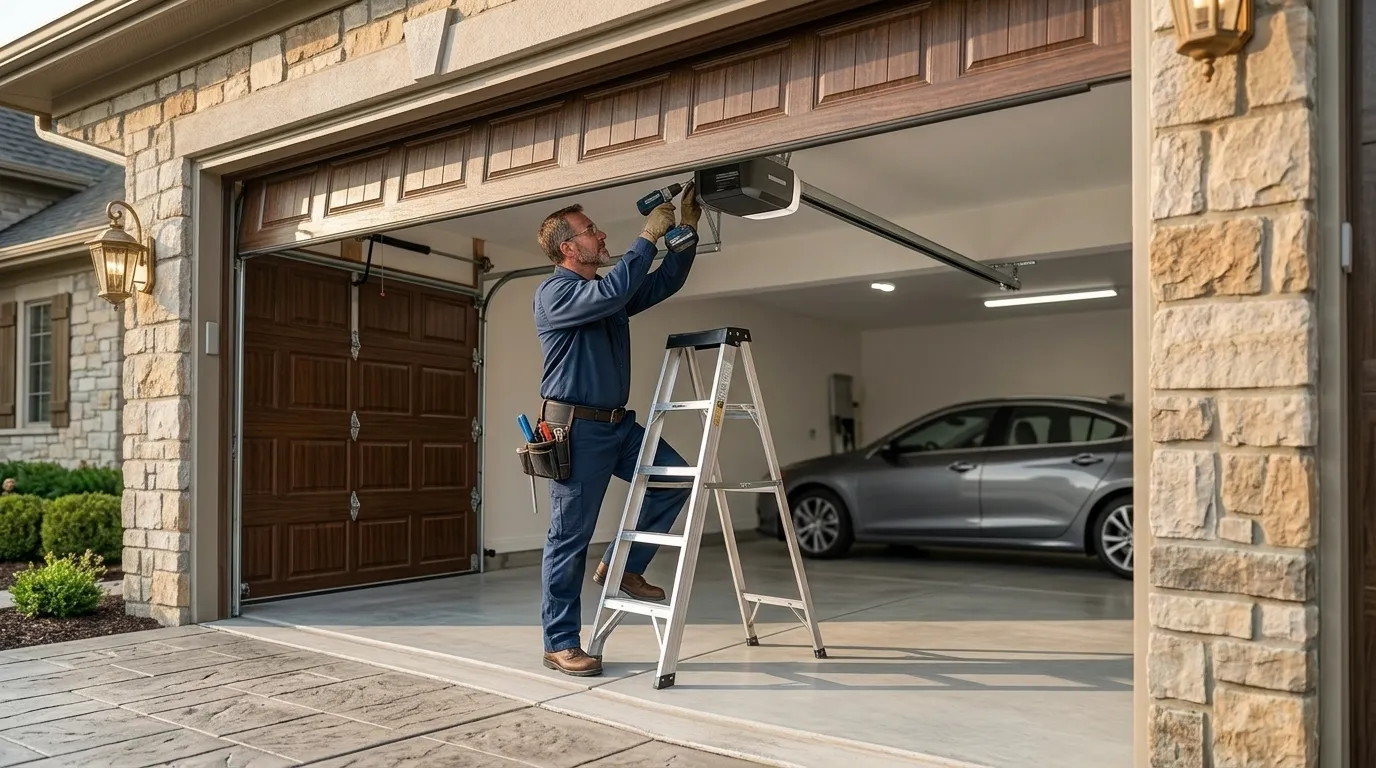
The repair
Lake Alfred's median home was built around 1986, which puts a lot of these houses right in the era when chain-drive openers with simple wall buttons were the standard install.
If your opener hasn't been swapped out since the house was built, you're likely running hardware that's near or past the end of its service life - worn drive gears, a chain that's stretched enough to skip on the sprocket, or a logic board that's starting to fail intermittently before it quits for good.
The fix depends on what's actually wrong. Sometimes it's the opener itself - a stripped gear or a dead capacitor on the motor. Sometimes the opener is fine and the real problem is upstream: a sagging track, a spring that's lost tension, or rollers dragging enough that the opener strains against a door that isn't moving freely.
We check the door's mechanical side first, because replacing a motor that's fighting bad hardware just burns out the new motor too. We carry common opener parts on the truck. Some older logic boards for discontinued models aren't stocked anywhere and have to be special-ordered - if that's your situation, we'll tell you straight rather than have you wait around.
Booking
Lake Alfred sits about 4 miles from our shop in Winter Haven, so a same-day slot is usually workable depending on where we're routed that day. There's no branch out here - we run the job from Winter Haven, load the truck for what your model likely needs based on what you tell us on the phone, and drive out.
Because we're not sitting on standby in Lake Alfred itself, it helps to describe the opener brand and roughly how old it is when you call. A 1990s chain-drive unit and a five-year-old belt-drive with a smart-hub controller are different repairs with different parts, and knowing which one we're dealing with before we leave the shop saves a second trip.
Local causes
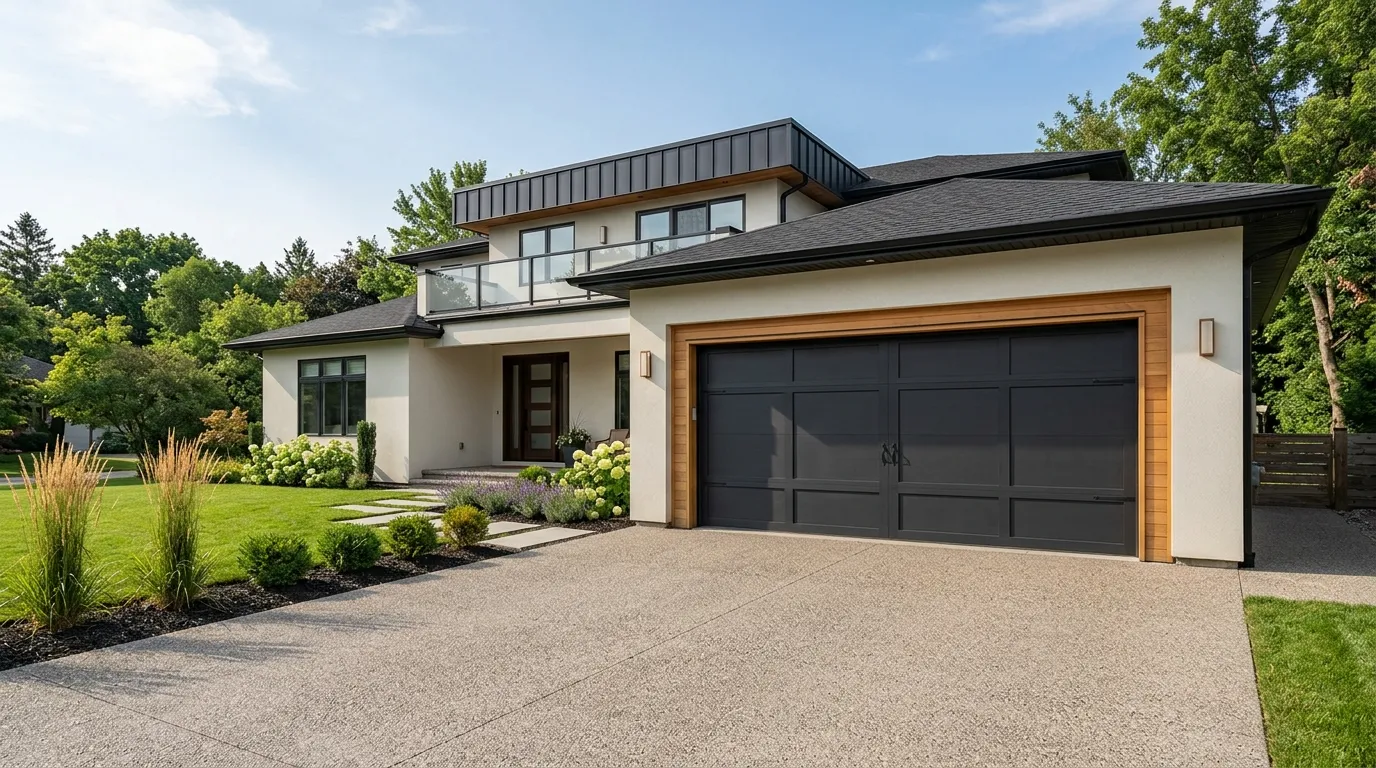
With roughly 2,538 households in Lake Alfred and a median income of about $68,854, this isn't a town where people are swapping openers on a whim - most folks run the original unit until it actually stops working, which is a reasonable call given the cost of replacing something that still mostly works.
That means the failures we see out here tend to be end-of-life failures rather than early defects: worn-out gears, dying capacitors, boards that have simply outlasted their design life.
The area's mild temperate climate keeps this from being a moisture or freeze problem the way it is farther north - openers here don't usually die from rust or cold-seized gears.
What kills them is straightforward age and use. A door opened twice a day for three decades puts a lot of cycles on a motor that was never built to be worked on, just replaced eventually.
Timing
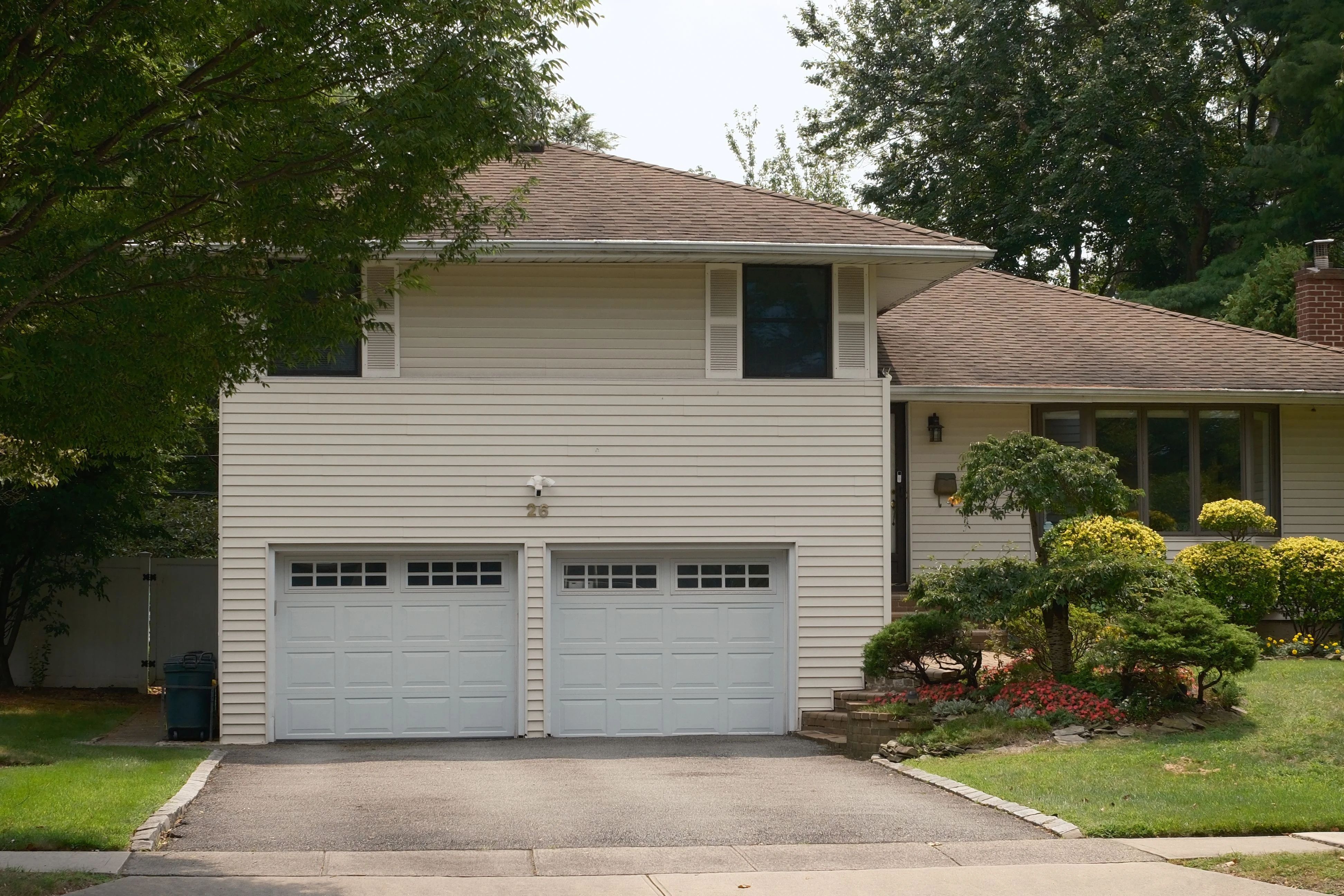
Most opener repairs, once we're on site, run under an hour - a gear kit, a capacitor swap, or a sensor realignment doesn't take long once we've diagnosed it correctly. The diagnosis is the part that varies. On a house with original hardware from the 1980s, we're often chasing two problems at once - the opener and the door mechanics it's been straining against - which can add time versus a straightforward motor swap.
If a part has to be special-ordered because the model's old enough that nobody local stocks it, that's a second visit, not a same-day fix. We'd rather tell you that up front than promise a timeline we can't hit.
Questions
Depends what's actually wrong. If it's a worn gear or a bad capacitor, fixing is usually cheaper and quick. If the board is failing and parts for that model are hard to source, replacement often makes more sense than chasing discontinued parts. We'll tell you which situation you're in before we start any work.
No. We run out of Winter Haven, about 4 miles away, and drive out for jobs. There's no local depot, so calling ahead with your opener's brand and rough age helps us load the right parts before we leave the shop.
Usually gear wear inside the motor housing, or a chain that's stretched and started to skip. Both get worse gradually rather than failing all at once, so a change in noise or speed is often the warning sign before it quits completely.
Not the way cold or heavy freeze-thaw climates do. The mild temperate conditions here don't cause the rust or seized-gear failures common up north. Most of what we see is straightforward age and use wearing out a motor that's run the same door for decades.
Explore more
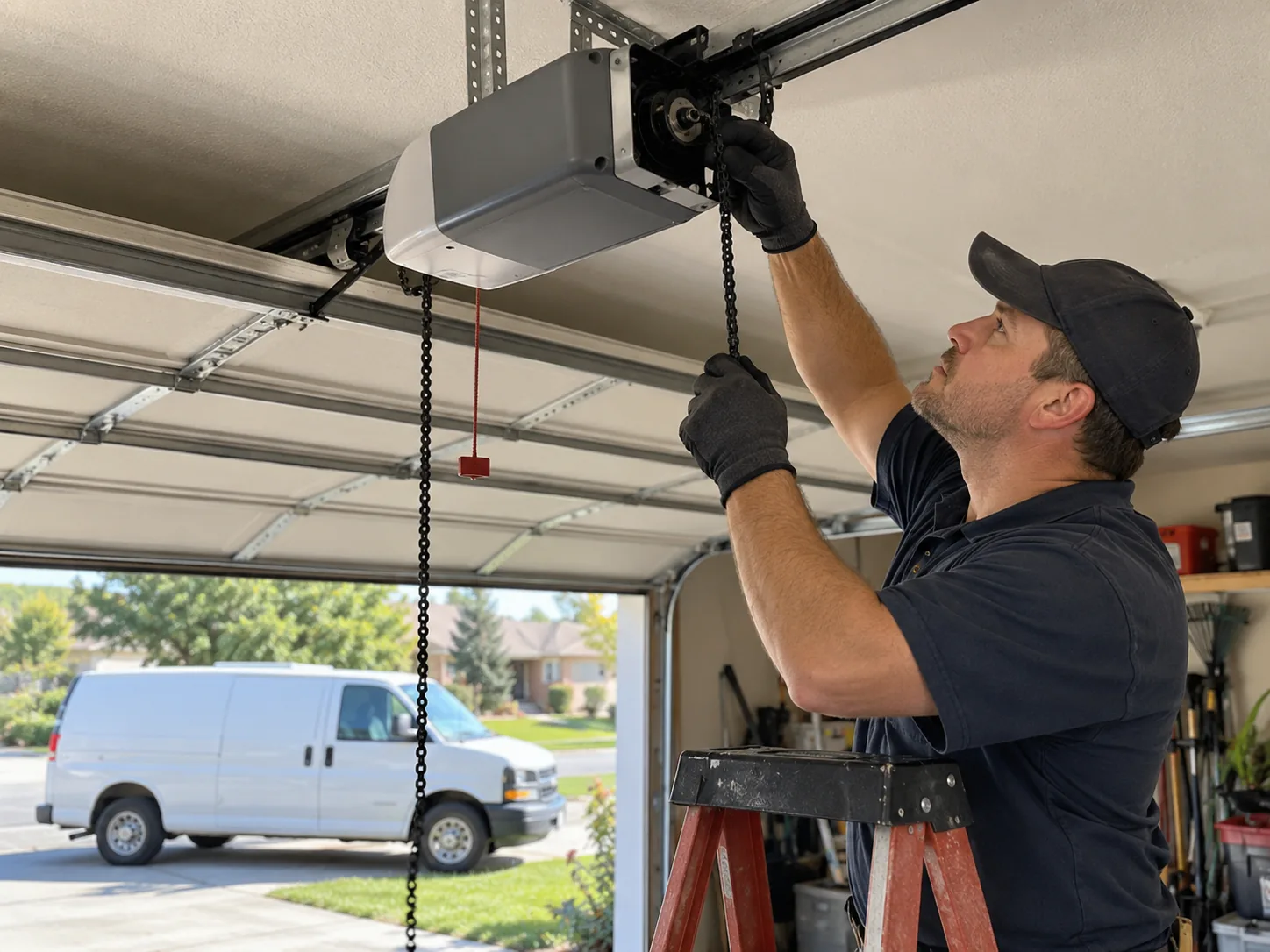
Ready when you are
Winter Haven Garage Door Pros repairs and installs garage doors, springs and openers in Winter Haven, FL and the surrounding area.