
Historical era panel matching
That last problem shows up a lot on doors installed when this area's housing was going up steadily from the 1950s through the 2010s, with a lot of the stock dating to the 1980s and 90s.
Winter Haven, FL
Dented or cracked garage door panels are common on Winter Haven's 1950-2012 housing stock. See why panels fail here and what a proper replacement job involves.
Pricing
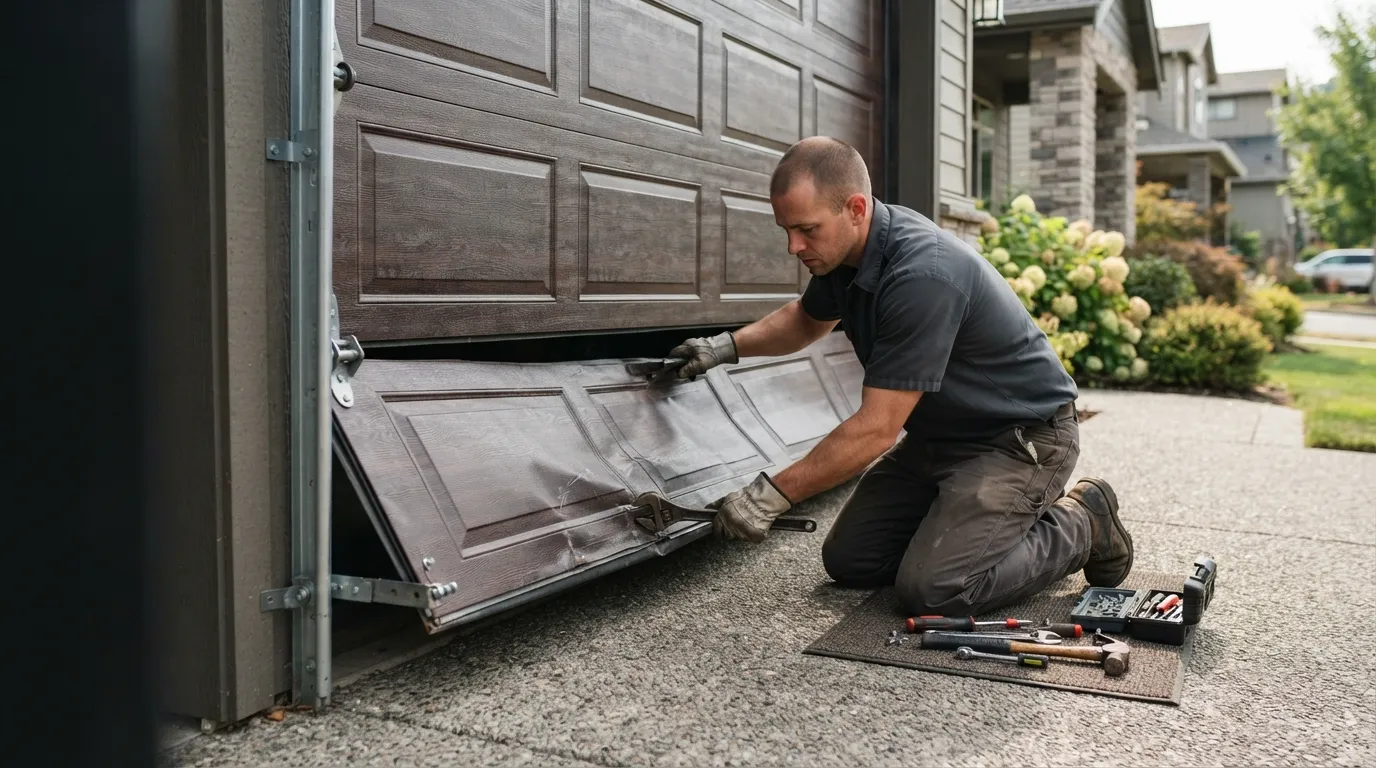
We don't post a flat number for panel replacement here, because the range depends on things we can't see until we're standing in front of the door: the panel's material, whether it's a steel sandwich panel or a single-skin aluminum one, and whether your door is old enough that the manufacturer has stopped making a matching panel at all.
That last problem shows up a lot on doors installed when this area's housing was going up steadily from the 1950s through the 2010s, with a lot of the stock dating to the 1980s and 90s.
A door from that era may need a full panel set rather than a single panel, because the original run was discontinued years ago and a mismatched replacement panel looks wrong and can throw the door out of balance.
We quote after we've measured the section, checked the track width, and matched (or tried to match) the panel to what's already hanging. If a true match isn't available, we'll tell you straight - sometimes replacing the whole door costs about the same as chasing down one obsolete panel, and we'll say so before we take your money.
Local causes
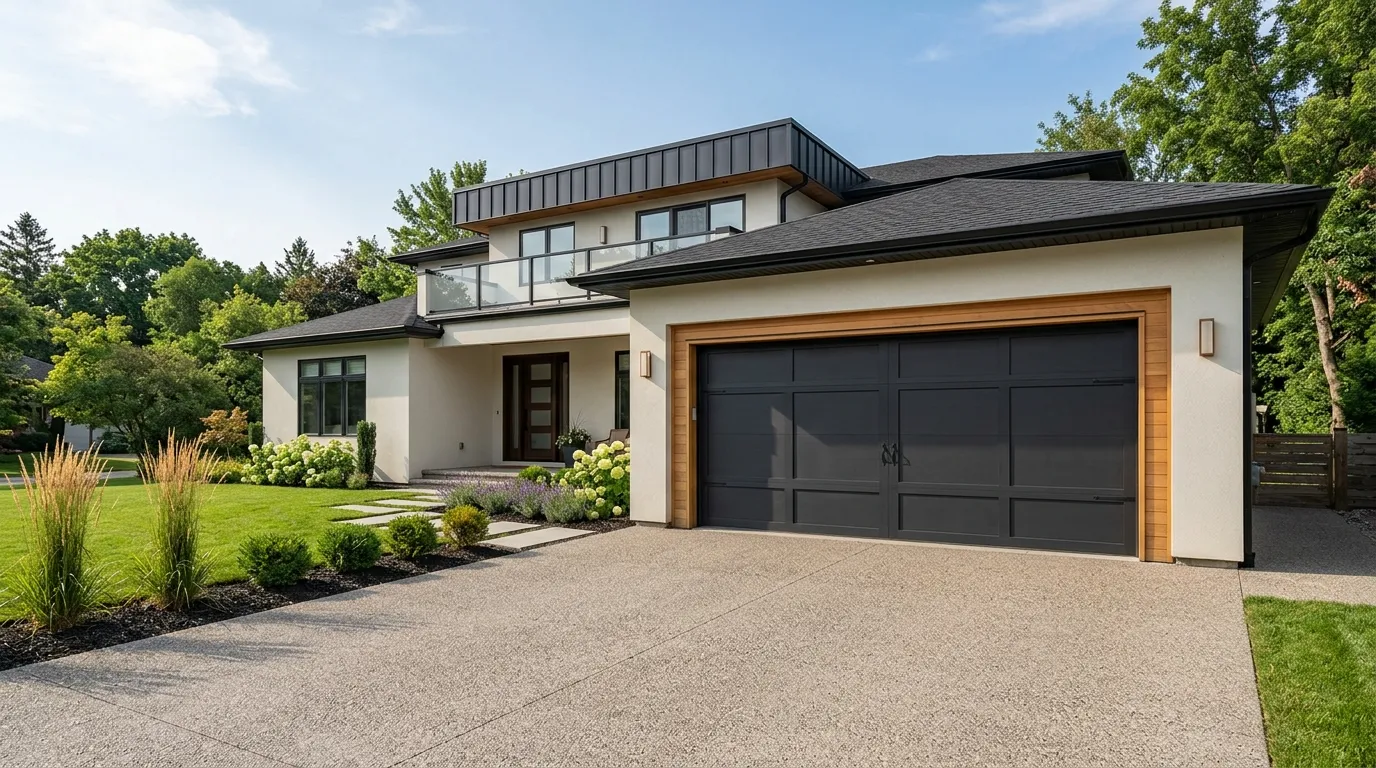
Panel damage isn't random here - it tracks with what the housing stock is made of and how the weather works on it. Homes in this service area were built anywhere from 1950 to 2012, with a lot of that construction clustered in the 1980s and 90s across the 27 communities we cover. Steel panels from that build era are thinner-gauge than what's sold today, and after three or four decades they dent easier and rust faster at the seams. The climate here is mild temperate - we're not fighting deep freezes or heavy snow load - but we do get sustained humidity and afternoon heat that work rust into any nick in the paint faster than a drier climate would. A small chip from a bike pedal or a car mirror doesn't stay small; it becomes a soft spot, then a bubble, then a hole. On a two-car door with the panel run split across sections, one bad panel throws off the whole face and stresses the rollers next to it. That's the pattern we see most: not storm damage, just decades-old steel that finally gave up in a climate that never lets rust rest.
Symptoms
Usually it starts as a dent you can live with - a low corner from a trailer hitch, a crease from a errant basketball. Then a corner starts flaking paint, and underneath it the steel has gone soft or started to pit.
On older doors, built when the housing stock in this area was mostly going up, you'll sometimes find the panel has actually separated slightly from the stile, so the door doesn't sit flush anymore and daylight shows at the seam.
Some owners notice the opener working harder or the door catching partway - that's usually the panel bowing out just enough to bind the roller track, not the opener itself.
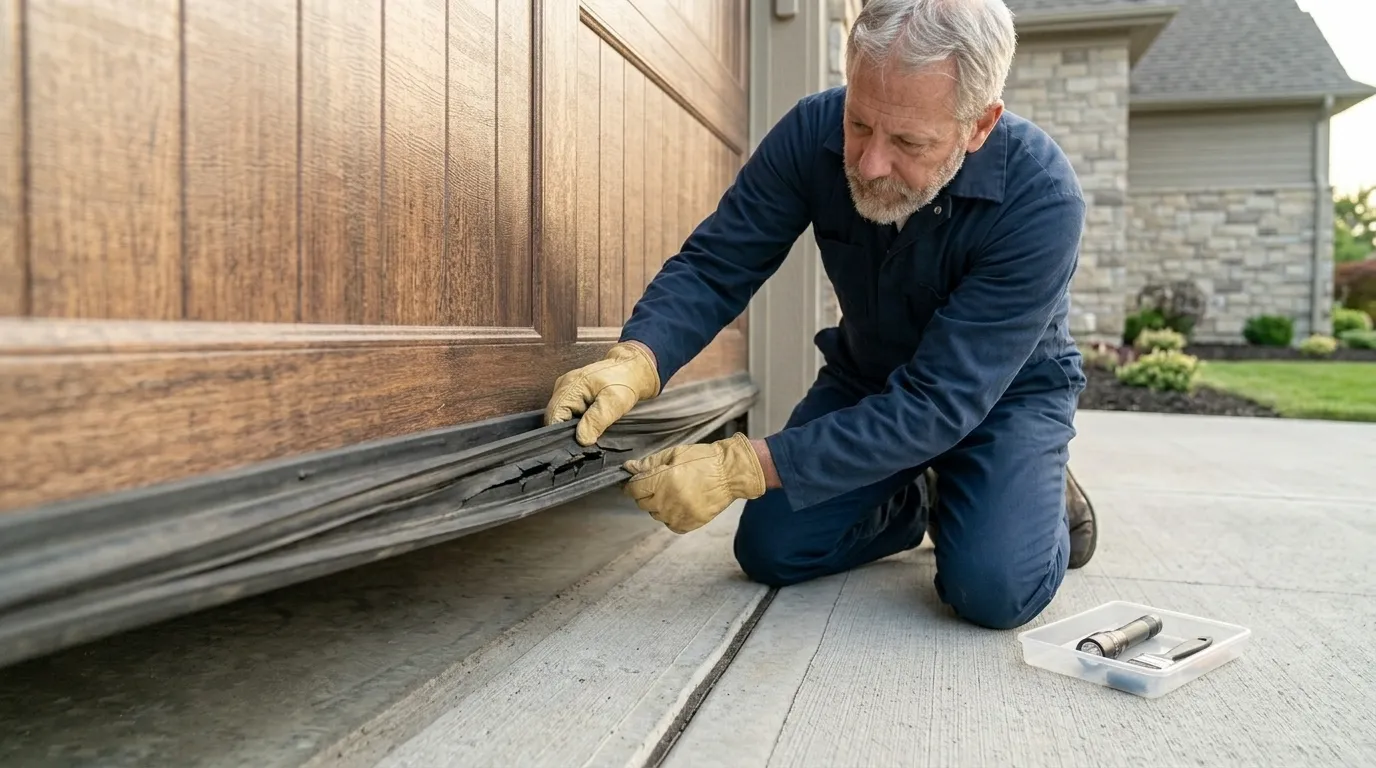
If a whole section is bent rather than just dented, the door may still close but the seal at the bottom won't sit even, and you'll get more air and bugs coming through than before. None of this fixes itself, and putting it off long enough turns a one-panel job into a full-door job once the track and rollers start taking the strain too.
The repair
First we identify the panel section, top to bottom, and match it against the manufacturer if the door is still in production - not a given on older homes here where the stock often dates back thirty-plus years.
If a match exists, we order the panel, disconnect the opener arm, unhook the cables and springs enough to relieve tension safely, then pull the roller brackets off the old section before swapping it in. We reset the hinges, rehang the rollers, and check the door runs level in the track before we put any tension back on the springs.
If the panel isn't available - which happens more than people expect with doors from this era - we'll walk you through the honest options: a close-but-not-exact match, a full replacement set, or a new door.
We don't push a mismatched panel just to close the ticket. A door that closes crooked or binds in the track is a comeback call waiting to happen, and we'd rather tell you now than fix it twice.
Questions
Sometimes. A lot of houses across this service area were built between 1950 and 2012, with plenty from the 1980s and 90s, and manufacturers stop stocking panels for discontinued lines. We check first - if there's no match, we'll tell you honestly rather than sell you a panel that won't line up right.
Depends on the door's age and how many other panels show wear. If it's one recent dent on an otherwise sound door, a panel swap makes sense. If the door's old enough that panels are hard to source, replacing the whole door often costs about the same as chasing a single obsolete part.
This area sits in a mild temperate band, so we don't get freeze-thaw damage, but sustained humidity works into any paint chip or dent and rusts it from the inside out. A small ding that would stay cosmetic in a dry climate turns into a soft spot here if it's left alone.
Yes, we work across the wider service area, including communities like Inwood, Auburndale, and Lake Wales. Pricing and panel availability can vary by house age from town to town, so we quote after seeing the actual door.
Explore more
Ready when you are
Winter Haven Garage Door Pros repairs and installs garage doors, springs and openers in Winter Haven, FL and the surrounding area.