Winter Haven, FL

Garage Door Spring Repair for Winter Haven Homes

Broken torsion springs are common in Winter Haven's 1980s-built housing stock. Learn what causes the failure and what a proper repair job involves.

Garage Door Spring Repair for Winter Haven Homes in Winter Haven
Same-day serviceTrusted local pros
Serving Winter Haven, FLBackground-checked techsHonest, upfront pricingFast local response
1950–2012
Typical build years of local homes
1986
Median year homes were built
10K
Typical spring cycle rating
Mild climate
Climate that shapes door wear

Pricing

What It Costs

We're not going to throw a number at you here, because a torsion spring job on a single door with standard hardware isn't the same job as a double door with two springs and a worn cable drum.

Spring cost variable factors

What we can tell you is what drives the cost: how many springs, the wire size and wind length the door actually needs, whether the drums and bearing plate are still good, and whether the opener has been fighting the broken spring long enough to strain the gears too.
In-person spring assessment need

A tech has to look at the door to give you a real number - anyone who quotes a spring job over the phone without seeing the door is guessing.

Dual spring age-cycle replacement

What we will say: replacing both springs on a double door at once, even if only one has gone, is the right call almost every time, because the second one is usually close behind on the same age cycle. That's not upselling, it's math on spring life.

Local causes

Why This Fails Locally

Winter Haven's housing stock runs from 1950 through 2012, with the median build year sitting at 1986 - and across the 27 named communities in this service area, most of what's out there is 1980s and 90s construction. That matters for springs because a torsion spring rated for 10,000 cycles doesn't care what decade it was installed in; it cares how many times the door has gone up and down since. A door built in the mid-80s has had close to forty years to burn through its spring's rated life, and most homeowners never touch the spring again after the builder installed it. Add the mild temperate climate here - no hard freeze-thaw cycling, no heavy snow load stress - and the springs aren't failing from weather extremes. They're failing from age and metal fatigue on original equipment that was never swapped out. That's the pattern across this whole service area: not storm damage, not humidity, just thirty-plus-year-old torsion springs finally letting go on the exact cycle count they were built for.

Why This Fails Locally
The Symptom

Symptoms

The Symptom

The door won't lift, or it lifts a few inches and stops. Sometimes you hear a loud bang from the garage first - that's the spring letting go, not the door itself breaking. If the opener tries to pull the door up on a broken spring, you'll hear the motor straining, and if nobody catches it, that strain moves into the drive gear next. A door that feels twice as heavy as it used to, or one side that looks visibly lower than the other when it's down, is a spring going before it snaps outright rather than after. Either way, the fix is the same: don't run the opener on a broken or weak spring. It's the fastest way to turn a spring repair into a spring-and-opener repair.

The repair

What the Fix Involves

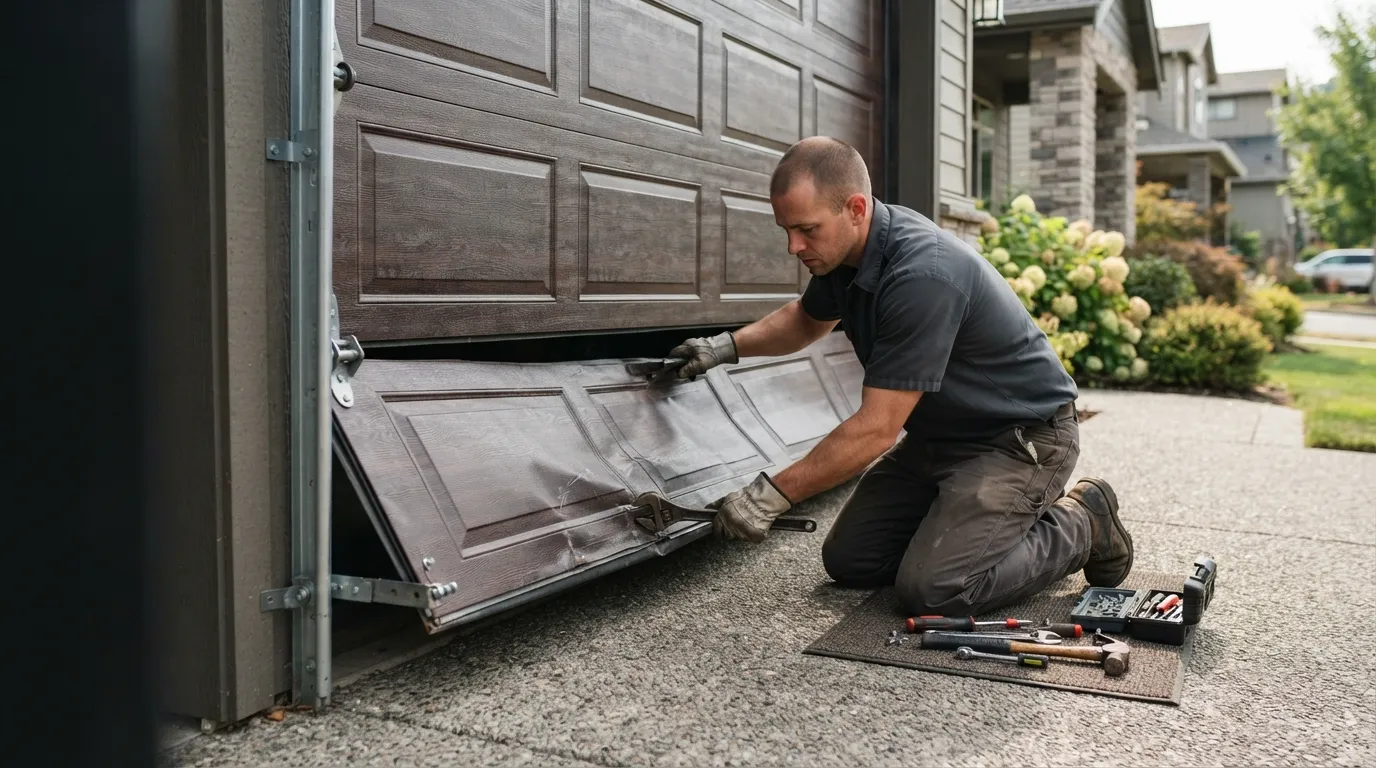
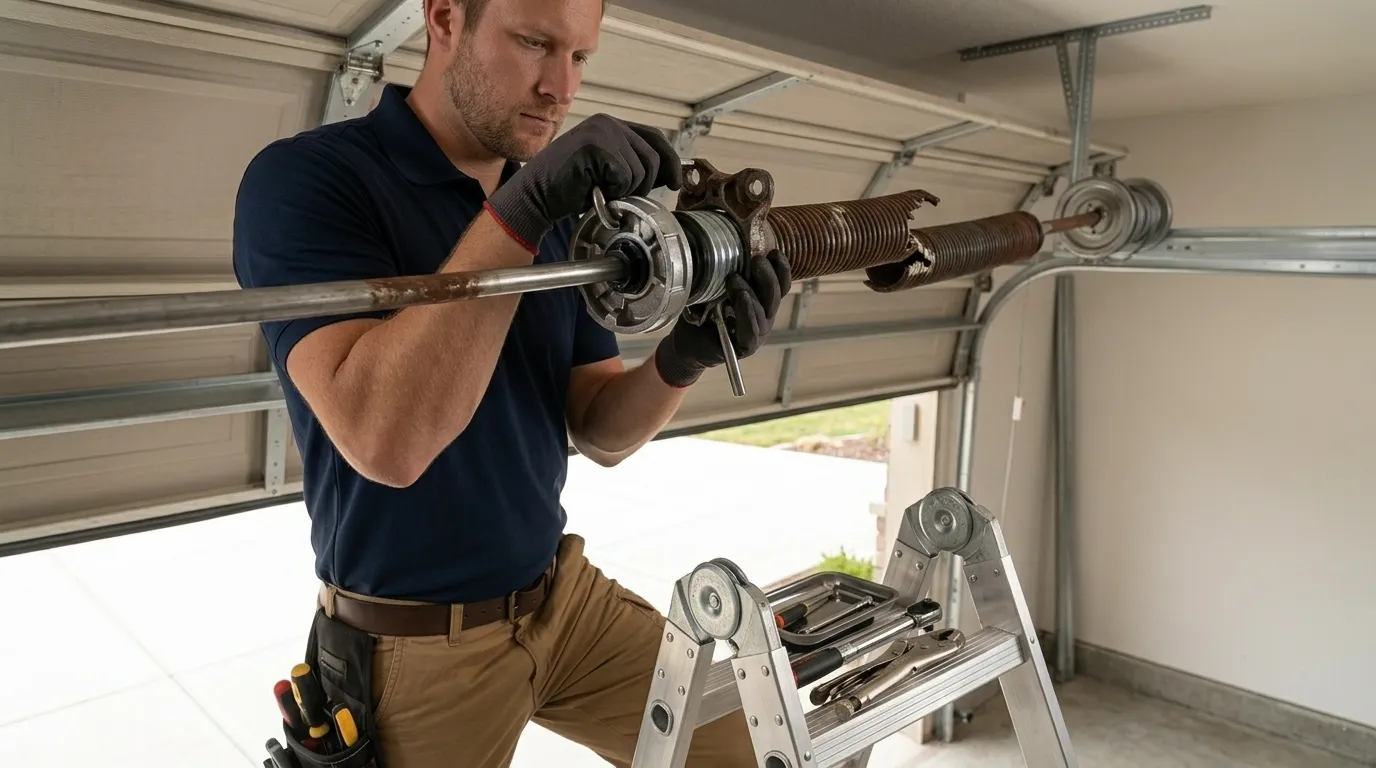
A proper spring job starts with the door in the closed position and the opener disconnected, because torsion springs hold real tension and they're not something to work on with the door hanging open.

  1. Bearing plate and drum inspection

    The tech pulls the old spring cones, checks the shaft, bearing plate, and cable drums for wear - these parts take load right alongside the spring and often need attention on a door that's original to a 1980s or 90s build.

  2. Spring weight and wind matching

    Then it's a matter of matching the new spring to the door's actual weight and the drum's wind length, not just grabbing a spring off the shelf that looks close. Once it's wound and set, the door gets balanced by hand before the opener goes back on - a door that doesn't hold position halfway open on its own isn't balanced right, no matter how new the spring is.

  3. Worn bearing failure liability

    One honest limit here: if the drums or shaft are pitted or bent from years of running on a bad spring, that's a bigger job than a spring swap, and we'll tell you that before we start, not after.

Questions

Common questions

How do I know if it's the spring and not the opener?

If the door won't budge, or budges only a few inches under power, and you hear the motor straining, the spring is almost always the cause. Try lifting the door by hand with the opener disconnected - if it feels heavy or drops on its own, the spring has failed. A working opener can't compensate for a dead spring.

Why do both springs need replacing if only one broke?

On a double door with two torsion springs, both were installed the same day and have logged the same number of open-close cycles. When one fails from age and fatigue, the other is on the same clock. Replacing just one saves a little now and usually costs another service call within a year or two.

Is it normal for a door built in the 1980s to still have its original spring?

It's common, and it's usually the problem. A lot of the housing stock in this area dates to the 1980s and 90s, and most builders installed one set of springs that nobody thought to replace since. Original springs running thirty-plus years are well past their rated cycle life even without any obvious damage.

Ready when you are

Need a garage door sorted in Winter Haven?

Winter Haven Garage Door Pros repairs and installs garage doors, springs and openers in Winter Haven, FL and the surrounding area.

Certified Experts Quality Assured
Call NowGet a quote